PRIZES to win! PROMOTIONS


W. Lance Bennett is Emeritus Professor of Political Science and Communication, and Senior Research Fellow at the Center for Journalism, Media and Democracy at the University of Washington.
In these turbulent times, when we are all struggling to imagine a new normal, Lance Bennett provides a compelling, provocative, and highly readable vision for constructing a new social reality. His approach is grounded in communication. To act more effectively on our many environmental crises, Bennet argues we need to start thinking and communicating differently, focusing on the intersections among global and local environmental, economic, and political dynamics. Through a well-documented and engaging analysis of the spread of ideas that challenge leading societal paradigms, such as the rise of neoliberalism, Bennett develops the idea flow model of political communication. He masterfully demonstrates how communication is most powerful when ideas are produced and packaged so that they can travel over different social networks and flow into popular narratives about who we are and how we want to live. This is an important and timely book. Communicating for the Future makes a significant contribution to our theoretical understanding of communication, networks, organization, and social change and simultaneously provides a thought-provoking, hopeful, and practical strategic guide for creating a more viable future. Cynthia Stohl, University of California, Santa Barbara Communicating the Future asks big questions and offers big ideas alongside a synthesis of insights from digital media research, political communication, and social movement studies to fight fragmentation in how we respond to and analyze the existential threat posed by the global climate emergency. Rasmus Kleis Nielsen, University of Oxford Lance Bennett provides a compelling, provocative vision for constructing a new social reality. This important book makes a significant contribution to our understanding of communication, networks, organization, and social change and provides a thought-provoking, hopeful, and practical guide for creating a more viable future. Cynthia Stohl, University of California, Santa Barbara
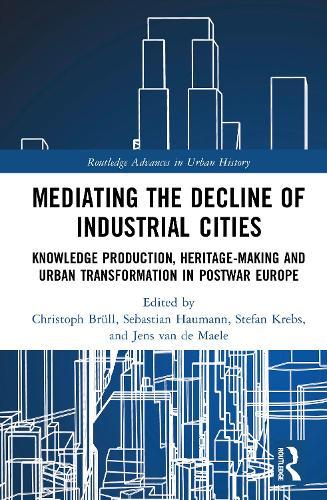
Mediating the Decline of Industrial...
Knowledge Production, Heritage-Making...
Hardback
$356.95 $285.90
Not in-store but you can order this
Machine Vision
How Algorithms are Changing the...
Paperback
$32.95
Not in-store but you can order this
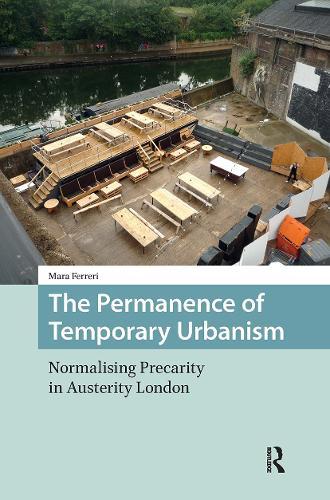
The Permanence of Temporary Urbanism...
Normalising Precarity in Austerity...
Paperback
$118.95 $95.30
Not in-store but you can order this
Semantic Media
Mapping Meaning on the Internet...
Paperback
$32.95
Not in-store but you can order this
Being with Data
The Dashboarding of Everyday Life...
Paperback
$36.95
Not in-store but you can order this