Bargains! PROMOTIONS


Richard Rogers, PhD, ABPP, is Regents Professor of Psychology at the University of North Texas. He is a recipient of the Guttmacher Award from the American Psychiatric Association, the Distinguished Contributions to Forensic Psychology Award from the American Academy of Forensic Psychologists, and the Amicus Award from the American Academy of Psychiatry and Law. In addition, Dr. Rogers is only the fourth psychologist to receive Distinguished Professional Contributions awards for both Applied Research and Public Policy from the American Psychological Association. He is the principal author of the Structured Interview of Reported Symptoms (SIRS) and its second edition (SIRS-2), often considered the premier measure for feigned mental disorders. Scott D. Bender, PhD, ABPP-CN, is Associate Professor of Psychiatry and Neurobehavioral Science at the University of Virginia (UVA). His primary appointment is with the Institute of Law, Psychiatry, and Public Policy at UVA, where his duties include teaching, research, and conducting forensic neuropsychological evaluations. Dr. Bender has published extensively, and his research focuses on differential diagnosis of malingering and the effects of traumatic brain injury on neurocognitive and emotional functioning. He frequently testifies on these and related matters in both criminal and civil cases.
With the addition of the neuropsychological perspective, this fourth edition includes everything a legal or clinical practitioner needs to know about the state of the art in deception detection. The assembled authors are impressive, and Rogers and Bender are acknowledged leaders in the field. Do not go into court in a case involving behavioral science issues without consulting this book. --Christopher Slobogin, JD, LLM, Milton Underwood Professor of Law, Vanderbilt University Law School The premier work on malingering and deception just got better! The fourth edition of this classic book provides up-to-date, insightful coverage of one of the most important topics in forensic mental health assessment. Rogers and Bender have assembled a world-class cast of contributors with broad research and clinical expertise. The fourth edition includes new chapters on cutting-edge topics, including neuropsychological models of feigned cognitive deficits, psychopathy, child custody, personnel selection, and more. This book is both scholarly and practical, which makes it attractive to students and experienced professionals alike. This is much more than a 'bookshelf' book--it is essential, indispensable reading for those who are or will be involved in conducting forensic mental health assessments. --David DeMatteo, JD, PhD, ABPP, Department of Psychology and Thomas R. Kline School of Law, Drexel University Clinicians and forensic practitioners will welcome the fourth edition of this book, particularly in the face of growing concern about the liability that may attend unwarranted use of the 'malingering' label. The stellar cast of contributors explores the terrain sensitively and with scholarly incisiveness, assuring the book's appeal to forensic psychology and psychiatry trainees. --Ezra E. H. Griffith, MD, Professor Emeritus of Psychiatry and African American Studies, Yale School of Medicine -This is an excellent book written by experts in the field. It covers deception in various populations, along with both psychological and medical illnesses. The fourth edition is justified because of the new chapters on neuropsychology and cultural assessments, along with revisions in the remaining chapters. *****!--Doody's Review Service, 10/12/2018ffThis excellent and standard reference [occupies] a crucial space on many forensic psychiatrists' and psychologists' bookshelves....Useful in clinical practice, especially in institutions that serve forensic or correctional populations. (on the third edition)--Journal of Psychiatric Practice, 1/1/2008ffThis is a rich volume that provides information and assessment strategies for patients who may be clinical challenges and enigmas. It is a lucid, well-written and helpful volume. (on the third edition)--International Journal of Social Psychiatry, 1/1/2013ffAkin to the eminence of the late Hervey Cleckley or Robert Hare as authorities on the topic of psychopathy, it is not unreasonable to accord Professor Richard Rogers analogous status as one of the world's leading scholars on the assessment of malingering....Professor Rogers's text and the wealth of knowledge he has compiled from an august collection of contributors should be viewed as a mandatory item for all forensic mental health practitioners. (on the third edition)--International Journal of Offender Therapy and Comparative Criminology, 2/1/2010
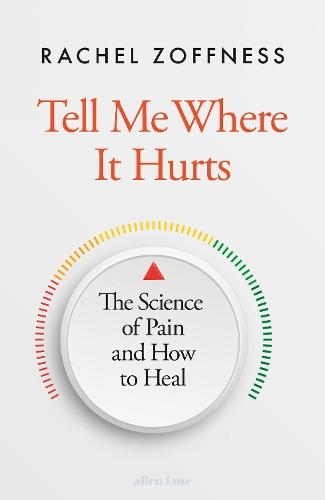
Tell Me Where It Hurts
The Science of Pain and How to Heal...
Hardback
$55
Not in-store but you can order this
Developmental Cognitive Neuroscience...
An Introduction
Paperback
$95.95
Not in-store but you can order this
Finding Inner Safety
The Key to Healing, Thriving, and...
Paperback
$30.95
Not in-store but you can order this
The Secret of Scent
Adventures in Perfume and the Science...
Paperback
$32.99
Not in-store but you can order this