Bargains! PROMOTIONS


Dr. P. Surendran is an accomplished physicist with a strong academic and research background. Born in 1992, he completed his Master of Science in Physics at Periyar E.V.R. College (Autonomous), Tiruchirappalli, India. He obtained his Ph.D. from Bharathidasan University in 2022. He is presently serving as a Guest Lecturer in the PG and Research Department of Physics, Arignar Anna Government Arts College, Namakkal, Tamil Nadu, India. His academic journey has been marked by exceptional achievements. He was awarded with a National Fellowship for Higher Education by the UGC, New Delhi, India, and received multiple accolades, including the Best Research Scholar Award and the Best Oral Presentation Award. He is an active reviewer for several international peer-reviewed journals. With a passion for research, he has published 22 peer-reviewed research articles, contributing significantly to the scientific community. His work has garnered 859 citations, reflecting the impact and relevance of his research. His primary research interests lie in converting bio-waste materials into Carbon Quantum Dots (CQDs) and exploring their optoelectronic applications. His groundbreaking research continues to open new avenues in both environmental sustainability and advanced material science. Karthik Kannan is currently serving as a Research Faculty in the Department of Mechanical Engineering at National Chung Cheng University, Taiwan, and as Adjunct Professor at Saveetha Institute of Technical and Medical Sciences, Chennai, India and Karpagam Academy of Higher Education, Coimbatore, India. Dr. Kannan is the recipient of the prestigious TEGC (Science and Technology specialization), approved by the NSTC. He was also honored with the highly competitive Brain Pool Fellowship from the NRF, which he held at Kumoh National Institute of Technology, South Korea. Dr. Karthik Kannan has an extensive publication record with over 170 peer-reviewed research articles with 8,076 citations (Google Scholar, November 2025), with an h-index of 57 and an i10-index of 125. Notably, Stanford University has listed him among the World’s Top 2% Scientists for six consecutive years (2020–2025), with distinction in both single-year and career-long impact rankings (1960–2023).
A First Course on Symmetry, Special...
The Foundations of Physics
Paperback
$153.95
Not in-store but you can order this
Decoherence and Quantum Darwinism...
From Quantum Foundations to Classical...
Hardback
$425.95 $341.06
Not in-store but you can order this
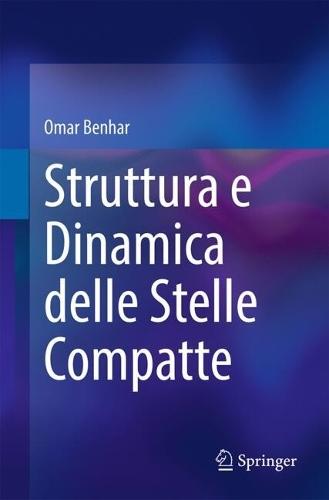
Struttura e Dinamica delle Stelle...
Paperback
$147.95 $118.08
Not in-store but you can order this