PRIZES to win! PROMOTIONS


David Goldberg is Assistant Professor of Africana Studies at Wayne State University. Trevor Griffey is a PhD candidate in U.S. History at the University of Washington.
Black Power at Work is an invaluable resource. Through the articles assembled by the two editors, the reader is introduced to an entirely different side of both the Black Freedom Movement and organized labor... It is a powerful examination of a social movement that has often been overlooked due to a class bias on the part of many commentators. The leaders and members of these militant organizations were, by and large, not from the middle stratum; they were not doctors, lawyers and ministers, but instead rank and file worker activists. - Bill Fletcher, Jr., ILR Review (July 2011) @font-face { font-family: Times New Roman ;}p.MsoNormal, li.MsoNormal, div.MsoNormal { margin: 0in 0in 0.0001pt; font-size: 12pt; font-family: Times New Roman ; }table.MsoNormalTable { font-size: 10pt; font-family: Times New Roman ; }div.Section1 { page: Section1; } Initially many readers might think this focus on construction jobs to be narrow, even parochial, but instead the book's contributors demonstrate how in just this one area Black Power proves far more complex and varied than traditional historiography, never mind the popular perception, has understood. -Derek Catsam, H-Net (January 2013) Highly public, remunerative, and symbolic of breadwinning manhood, construction trade jobs have long held a special place in urban economies and big-city politics. The authors of Black Power at Work go to the heart of why such jobs were among the most hotly contested during the civil rights and black power decades of the 1960s and 1970s. The politics of black power come to life not in abstract manifestos but in the daily grind to win concrete economic opportunity for people and communities in the racially segregated postwar metropolis. -Robert Self, Brown University A richly detailed, multicity, and broadly scoped exploration of black male laborers' quests for construction jobs in the wake of interminable racism, Black Power at Work challenges us to rethink how laborers constructed and constrained liberation struggles, inner-city communities, and affirmative action policies in American during the 1960s and 1970s. This collection forcefully reshapes our understanding of labor politics and culture in the Black Power era and its continuing effects today. -Rhonda Y. Williams, author of the award-winning The Politics of Public Housing: Black Women's Struggles against Urban Inequality This book's provocative chapters refute the myth of a sharp divide between civil rights and Black Power. The authors tell varied stories of mass jobs struggles involving working-class African Americans in the North and West that reached back to the early 1960s and into the 1970s. Black Power at Work expands the regional scope and temporal reach of civil rights scholarship while raising timely questions about the kinds of coalitions needed for economic justice to prevail in America. -Nancy MacLean, author of Freedom Is Not Enough: The Opening of the American Workplace Black Power activists did not only wear dashikis or berets but also wore overalls and hardhats. This original collection of essays opens the way for a reappraisal of Black Power politics from the perspective of the ordinary workers whose struggles for justice transformed the American workplace. The authors direct our attention to the everyday activism around dignity, representation, and economic empowerment in one of America's most important industries. -Thomas J. Sugrue, author of Sweet Land of Liberty: The Forgotten Struggle for Civil Rights in the North
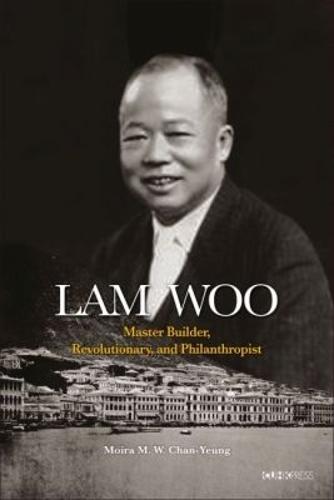
Lam Woo
Master Builder, Revolutionary, and...
Hardback
$80.95
Not in-store but you can order this
Programming & Analysis (PA) ARE...
ARE 5.0 Overview, Exam Prep Tips,...
Paperback
$186.95 $149.75
Not in-store but you can order this
Housebuilding in Transition
Based on Studies in the San Francisco...
Paperback
$82.95
Not in-store but you can order this
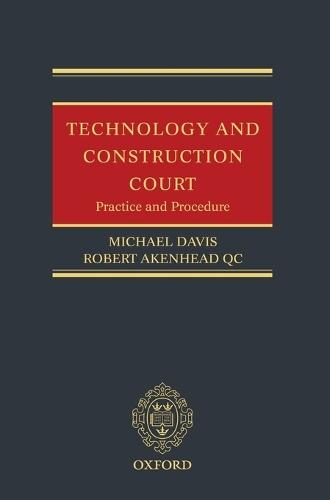
Technology and Construction Court...
Practice and Procedure
Hardback
$736
Not in-store but you can order this