Beat the rise! Delivery fees are going up soon. INFO


Jogeir N. Stokland is a researcher at the Norwegian Forest and Landscape Institute and an associate professor at the University of Oslo, Norway. He has conducted research on forest biodiversity, dead wood dynamics and species diversity in decaying wood for more than 20 years. His expertise covers both entomology and mycology. Juha Siitonen is a researcher at the Finnish Forest Research Institute. He has conducted research on the effects of forest management on dead wood and saproxylic species, including beetles and polypores, for more than 20 years. He is a member of the Finnish beetle working group, and has been involved in the red-list assessments of Finnish fauna. Bengt Gunnar Jonsson is a professor of Plant Ecology at Mid Sweden University. His research focuses on forest history and dynamics and its role in maintaining forest biodiversity. He has played an active role in several national conservation projects initiated by the Swedish Environmental Protection Agency and the Swedish Forest Agency.
'The book is richly illustrated, containing dozens of photographs, plots and diagrams ... The authors succeed admirably in their aim of writing a book on dead wood ecology that is 'accessible to readers without expertise in any particular discipline' ... [It] is a worthwhile investment for anyone interested in dead wood ecology ... The book is heartily recommended ...' Nordicum-Mediterraneum: Icelandic e-Journal of Nordic and Mediterranean Studies (nome.unak.is/nm-marzo-2012/) '... the first ever whole book to attempt an introductory synthesis of all that is known about the wildlife associated with decaying wood ... I discovered [I was] finding things previously unfamiliar to me in every chapter. A great strength is the combination of mycology and entomology ...' British Journal of Entomology and Natural History ... it will serve as a key reference for many years. As an addition to the prestigious, authoritative Ecoloy, Biodiversity, and Conservation series, this eminently scientific treatment will inform pure and applied advanced students of wood biodiversity. With over 80 pages of references, it will serve as an up-to-date bibliography of saproxylic species and related literature. Highly recommended. D.L. Richter, Choice Magazine ... the first ever whole book to attempt an introductory synthesis of all that is known about the wildlife associated with decaying wood ... I discovered [I was] finding things previously unfamiliar to me in every chapter. A great strength is the combination of mycology and entomology ... British Journal of Entomology and Natural History
Ecosystem and Species Habitat Modeling...
Hardback
$445.95 $356.62
Not in-store but you can order this
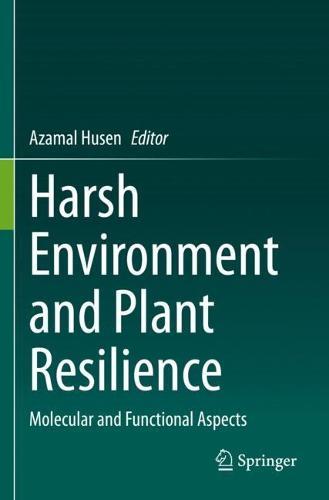
Harsh Environment and Plant Resilience...
Molecular and Functional Aspects...
Paperback
$385.95 $308.92
Not in-store but you can order this
Photosynthesis, Respiration, and...
Paperback
$385.95 $308.92
Not in-store but you can order this
Eating to Extinction
The World’s Rarest Foods and Why...
Paperback
$26.99
Not in-store but you can order this