Beat the rise! Delivery fees are going up soon. INFO


Ahmad Hussaini Jagaba is an assistant professor in the Department of Civil Engineering, Faculty of Engineering, University of Tabuk, Saudi Arabia. He obtained his B.Eng. from Abubakar Tafawa Balewa University, Bauchi; M. Eng. Civil Engineering from Universiti Tun Hussein Onn Malaysia (UTHM) and PhD in Civil Engineering (Environmental) from Universiti Teknologi PETRONAS, Bandar Seri Iskandar, Perak Darul Ridzuan, Malaysia. He has authored and co-authored several articles that include research articles, review papers, conference papers, and book chapters in environmental engineering with special emphasis in physical/chemical and biological wastewater treatment, biomass conversion, sewage and industrial sludge and solid waste management. He is an Editor in the “International Journal of Sustainable Engineering (IJSE), Taylor & Francis. He is also a reviewer for reputable journals in: Elsevier, Springer, MDPI, Wiley online etc. Nuhu Dalhat Mu’azu is a professor at the Department of Environmental Engineering, College of Engineering, Imam Bin Abdulrahman Faisal University, Saudi Arabia. He obtained his bachelor’s degree (B.Eng. Civil Engineering) from Ahmadu Bello University, Zaria Nigeria and his MSc and PhD in Civil (Water Resources and Environmental) both from King Fahd University of Petroleum and Minerals, Saudi Arabia. He has been engaged in research and teaching in the areas of Environmental Engineering and related engineering and science disciplines. His research focuses on advanced technologies for water and wastewater treatment, wastes management, geoenvironmental engineering, wastewater treatment plant modelling and simulation, process optimization and life cycle assessment for achieving sustainable environmental management. He has published several articles in high ranked journals of international repute. He has been actively involved in consultation services and serves as a principal investigator in execution of several budgeted scientific research projects in collaboration with local and international partners in areas covering technologies for water, wastewater and soil/ground remediation and environmental sustainability in management of solid waste, water, wastewater infrastructures. Dr. Mohamed Hasnain Isa obtained his BSc Eng (Civil) and MSc Eng (Environmental & Water Resources) degrees from the Aligarh Muslim University, India. He completed PhD (Environmental Eng) from the University of Newcastle upon Tyne, England. Dr. Hasnain has held various academic positions in India and Malaysia. He is currently the Assistant Vice Chancellor (Research and Innovation) and a Professor at the Universiti Teknologi Brunei, Brunei Darussalam. Prof. Hasnain’s research emphasis is on the treatment of wastewater with the aim of achieving resource efficiency and advance sustainability. His research focusses on energy recovery through removal of organic matter and degradation of recalcitrant compounds. Dr. Manfred Lübken has obtained his Diploma degree in Civil Engineering in 2002 from the Leibniz University Hanover, Germany. He completed PhD (Environmental Engineering) in 2009 from the Technical University Munich, Germany. He is currently a senior researcher at the Institute of Urban Water Management and Environmental Engineering of the Ruhr University Bochum, Germany. His research focuses on optimization of (waste)water treatment processes, and mathematical modeling. He has authored and co-authored several articles from fundamental to application-oriented research in the environmental engineering field. In addition, Dr. Manfred Lübken is involved in the development and revising of regulations as well as of technical standards within the context of wastewater treatment and water reuse at national and international level. Abdullahi Kilaco Usman is a lecturer at the Department of Civil Engineering, University of Hafr Al Batin, Kingdom of Saudi Arabia. He obtained his bachelor’s degree (B.Eng. Water and Environmental) from Ahmadu Bello University, Zaria Nigeria, and his MSc (Environmental Engineering) from King Fahd University of Petroleum and Minerals, Saudi Arabia, and PhD in Civil Engineering from Universiti Technologi Malaysia. His research interests include electrokinetic remediation of contaminated soils, photocatalysis/adsorption processes for water and wastewater treatment. He has published several articles that include research articles, review papers, conference papers, and book chapters in environmental engineering with special emphasis in physical/chemical and biological wastewater treatment. He has been involved in several scientific research funded projects in soil and groundwater remediation. He is also a reviewer for reputable journals including Elsevier amongst others.
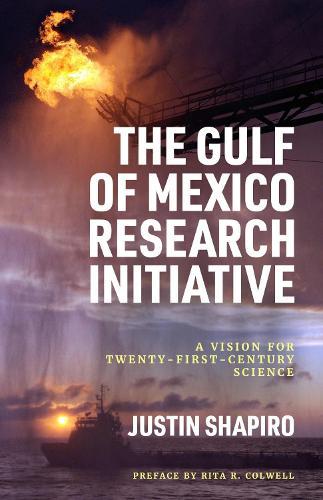
The Gulf of Mexico Research Initiative...
A Vision for Twenty-First-Century...
Hardback
$276.95 $221.73
Not in-store but you can order this
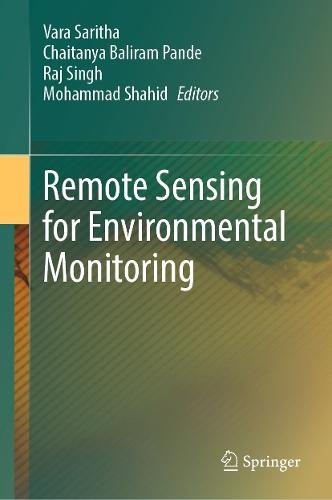
Remote Sensing for Environmental...
Hardback
$490.95 $392.41
Not in-store but you can order this
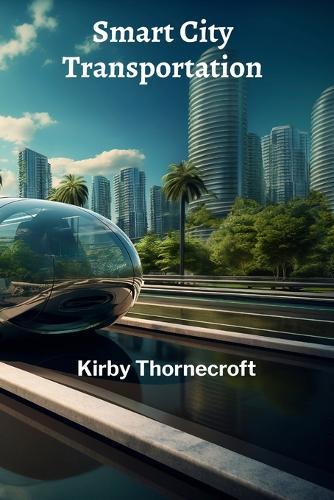
Smart City Transportation
Leveraging Technology for Efficient...
Paperback
$48.95 $41.88
Not in-store but you can order this
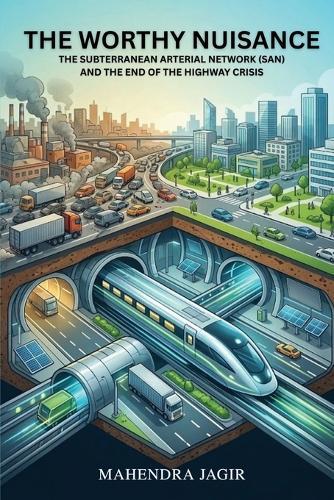
The Worthy Nuisance
The Subterranean Arterial Network...
Paperback
$25.95 $23.32
Not in-store but you can order this
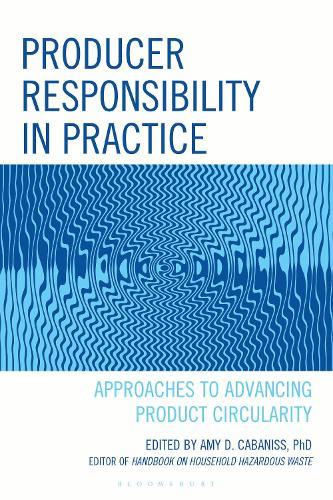
Producer Responsibility in Practice...
Approaches to Advancing Product...
Paperback
$150
Not in-store but you can order this