Bargains! PROMOTIONS


Tor Lattimore is a researcher at Google DeepMind working on reinforcement learning, bandits, optimisation and the theory of machine learning. He is the co-author of an introductory book on bandit algorithms and has published nearly 100 conference and journal articles. He is an action editor for the Journal of Machine Learning Research.
'A landmark text on bandit convex optimization by an authority in the field. This book develops the full theory of zeroth-order online convex optimization-where one must learn from noisy function values without gradients-establishing regret bounds and presenting elegant algorithms from gradient descent to cutting planes, multiplicative updates, and Newton methods. Touching on all areas central to advanced optimization, it is an essential companion for researchers, offering both the conceptual foundations and the algorithmic toolkit that continue to drive progress in online convex optimization and mathematical optimization more broadly.' Elad Hazan, Princeton University
Continuous Optimization For Data...
Paperback
$156.95 $125.95
Not in-store but you can order this
Sustainable Supply Chain of Renewable...
Hardback
$490.95 $392.41
Not in-store but you can order this
Quantum Machine Learning and Optimisation...
Drive financial innovation with...
Paperback
$101.95 $81.33
Not in-store but you can order this
Operation Modeling and Collaborative...
Hardback
$385.95 $308.92
Not in-store but you can order this
Mathematical Optimization Theory...
Recent Trends: 23rd International...
Paperback
$191.95 $153.86
Not in-store but you can order this
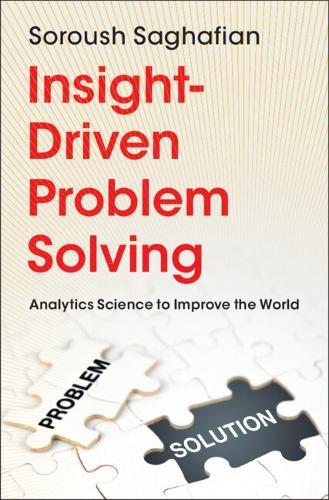
Insight-Driven Problem Solving
Analytics Science to Improve the...
Hardback
$278.95 $222.98
Not in-store but you can order this