Beat the rise! Delivery fees are going up soon. INFO


Charles C. Mann is the author of 1491, which won the U.S. National Academy of Sciences’ Keck award for the best book of the year. A correspondent for The Atlantic Monthly, Science, and Wired, he has covered the intersection of science, technology, and commerce for many newspapers and magazines here and abroad, including the New York Times, Vanity Fair, the Washington Post, and more. In addition to 1491, he was the co-author of four other non-fiction books. He is now working on a companion volume to 1491. His website is www.charlesmann.org. David H. Freedman is a contributing editor for Inc. Magazine, and has written on science, business, and technology for The Atlantic, The New York Times, The Harvard Business Review, Fast Company, Science, Wired, and many other publications. His newest book, Wrong, about why experts keep failing us, came out in June, 2010. His last book (coauthored) was A Perfect Mess, about the useful role of disorder in daily life, business, and science. He is also the author of books about the US Marines, computer crime, and artificial intelligence. Freedman's blog, “Making Sense of Medicine,” takes a close, critical look at medical findings making current headlines with an eye to separating out the frequent hype. He lives near Boston.
A real-life tale of cops vs. hackers, by two technology writers with a flair for turning a complicated crime and investigation into a fast-moving, edge-of-your-seat story. Freedman (Brainmakers, 1994) and Mann (coauthor, Noah's Choice, 1995) tell the tale of a reclusive teenage hacker, alternatively dubbed Phantomd and Infomaster, who hopscotches around the Internet, breaking into systems and generally wreaking havoc online; his absurd, dangerous, monomaniacal course of trespassing on computer networks causes even his hacker cronies to fear him. With incisive descriptions and prose that's never overburdened by jargon, the authors chronicle the progression of Phantomd's online intrusions from university computers to Intel to top-secret government databases, and the federal investigation that finally nabs him. Unfortunately, the story loses steam at the end, when the FBI inexplicably decides not to have him prosecuted. Still, the book works because of the authors' skill at portraying their characters and building suspense and momentum from online events that are difficult to visualize. The best character, by far, is Phantomd himself, a disabled and massively antisocial youth who is capable of spending days at a time at his computer. As the hacker gets deeper and deeper into trouble, his brother tries futilely to save him, and the book takes on the dimensions of an information-age tragedy. Phantomd's last line, in particular, is heartbreaking, a testament to how the writers deftly recruit the reader's sympathy for the story's antagonist. Finally, the book becomes a portent: The authors make a strong case for the vulnerability of the Internet, describing its electronic Maginot lines and their inadequacy in the face of patient young invaders with powerful tools. With this extraordinary story and its hard-learned lessons, the authors should make more than a few of their readers wary of staking their privacy on the online world. (Kirkus Reviews)
Human Hacked
My Life and Lessons as the World's...
Paperback
$57.95
Not in-store but you can order this
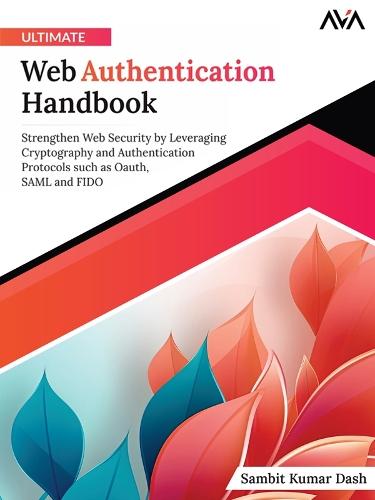
Ultimate Web Authentication Handbook...
Strengthen Web Security by Leveraging...
Undefined
$80.95 $68.99
Not in-store but you can order this
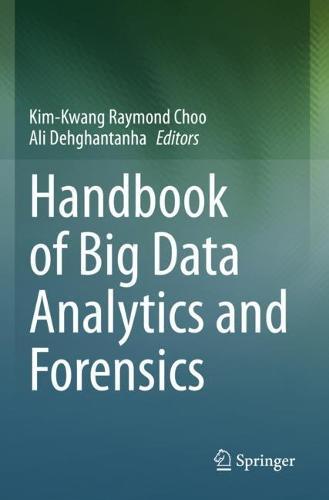
Handbook of Big Data Analytics and...
Paperback
$296.95 $237.35
Not in-store but you can order this
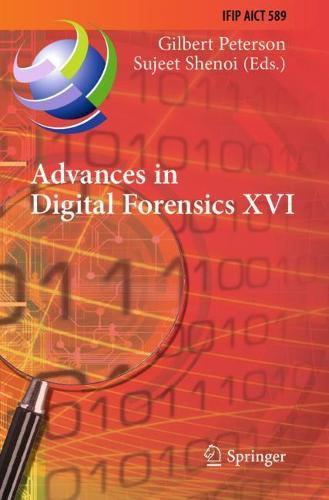
Advances in Digital Forensics XVI...
16th IFIP WG 11.9 International...
Paperback
$251.95 $201.58
Not in-store but you can order this
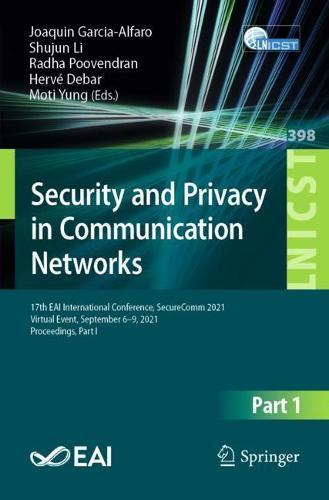
Security and Privacy in Communication...
17th EAI International Conference,...
Paperback
$251.95 $201.58
Not in-store but you can order this
The Hardware Hacking Handbook
Breaking Embedded Security with...
Paperback
$130
Not in-store but you can order this