PRIZES to win! PROMOTIONS


Michel Houellebecq is a novelist, a poet, and an essayist, as well as an occasional actor, filmmaker, and singer. Acclaimed both in his native France and worldwide, his novels include Atomised, Platform, The Map and the Territory, and Submission. Shaun Whiteside is a Northern Irish translator of French, Dutch, German, and Italian literature. He has translated many novels, including Manituana and Altai by Wu Ming, The Weekend by Bernhard Schlink, and Magdalene the Sinner by Lilian Faschinger, which won him the Schlegel-Tieck Prize for German Translation in 1997.
""[Annihilation] is a book about discovering the ties that bind and about letting yourself be bound by them. Filled with acceptance if not serenity, it has the happiest ending you can have in a book by a writer who doesn't believe in happiness."" --John Powers, NPR ""More than a meditation on existential melancholy. [Annihilation] also holds up a mirror to contemporary France, this time in a presidential-election year and in unexpected ways."" --The Economist ""On a deeper level, Houellebecq seems to be confronting the Raison family with death mostly so that he can show us their love for one another--and their dependence on religious belief for, if not happiness, at least consolation . . . Truly impressive in its scope and humanity yet also strangely tranquil, almost sedated, as if it was written in the lotus position."" --Trevor Merrill, Compact ""Michel Houellebecq has crafted a thrilling and terrifying look into social instability and the lives it puts at risk."" --Michael Welch, Chicago Review of Books ""Both a writer whose instincts are old-fashioned . . . and radically of the moment, willing to expose the sordid, despairing interiority of much of first-world private life . . . This is what Houellebecq, at his best, does: hook the reader with a portrait of a man's limitations only to put him through a series of narrative paces that march him to an end -- end of life, end of prospects, end of story -- and elicit the compassion necessary to see him for more than his glaring shortcomings."" --Wyatt Mason, The New York Times ""I can't think of a contemporary novelist anywhere whose work reflects the mood of the times so acutely [Houellebecq] seems to anticipate events; or any other writer who is so willing to show us the world as he sees it, not as we'd like it to be."" --Melanie McDonagh, The Evening Standard ""A compassionate, deeply affecting novel about love and death and the way we treat the dying . . . A novel of massive ambition, worthy of Balzac, deeply embedded in the reality of France, telling truths that come, in the end, straight from Pascal."" --David Sexton, The Spectator ""Annihilation may present itself as a political thriller, but at its heart is a far more intimate catastrophe . . . In the end, Annihilation leans neither towards hope nor despair, but towards a transcendent serenity--an eerie peace that arises, as everything arises in this novel, in the space to which warring forces give shape."" --Sam Byers, The Guardian ""I like to think Houellebecq is an optimist deep down, and this new novel supports my gut feeling . . . but there's still plenty of his trademark black-humored venom . . . The final part of the book is a deeply poignant, theistically suggestive masterpiece."" --Oskar Osprey, Artforum ""[Houellebecq] has become an undisputed literary titan . . . [In Annihilation] we're given Houellebecq at his most tender-hearted and vulnerable . . . Politics, the conspiracy at the heart of the book, all the rest of it--everything fades away. And all that's left, all that matters, is embracing the one you love."" --Camilla Grudova, The Telegraph
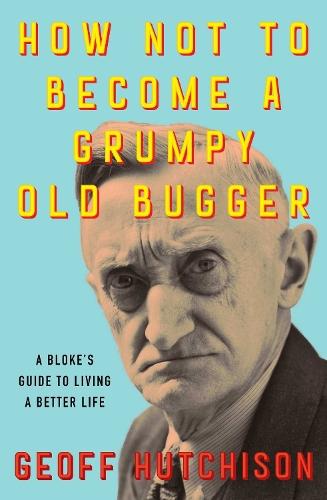
How Not to Become a Grumpy Old Bugger...
A Bloke's Guide to Living a Better...
Paperback
$36.99
In Stock 😊