Beat the rise! Delivery fees are going up soon. INFO


David Rhoads is Emeritus Professor of New Testament at the Lutheran School of Theology at Chicago. He is author of Reading Mark: Engaging the Gospel (2004). Troy Martin is Professor of Bible in the Department of Religious Studies at Saint Xavier University in Chicago. He is author of Apostolic Confirmation and Legitimation in an Early Christian Faith Document: A Commentary on the First Epistle of the Apostle Peter (forthcoming).
""For decades, Rhoads has illuminated the narrative and performance dynamics of Mark's Gospel. Now, in collaboration with Troy Martin, Rhoads offers an informative and accessible resource to help students and pastors analyze the Greek text of the New Testament, using Mark 1 as a guide. A highly recommended resource!"" --Kelly R. Iverson, Professor of New Testament, Baylor University ""This volume by Rhoads and Martin is erudite but accessible, guiding readers through the structure, grammar, syntax, meaning, and style of the Greek New Testament, with Mark 1 as its home base. Born out of practicum sessions, it provides a hands-on path to linguistic analysis without requiring readers to sacrifice their sanity (or weekends) on the altar of parsing charts. Reading this book is like sitting in class with two textual mechanics who make the heavy lifting look easy and leave you admiring the frequent but effortless participle flex."" --T. Michael W. Halcomb, Assistant Professor of Bible and Writing, Montreat College ""What a gift Rhoads and Martin have given to those who want to better understand the Greek New Testament! They model a process for mining the Greek text that turns up golden insights for everyone. Students will appreciate the careful step-by-step to imitate. Professors will be grateful for the detailed examples to share. Pastors who only vaguely remember Greek will find their skills strengthened to go beyond commentaries."" --Peter S. Perry, Affiliate Assistant Professor of New Testament, Fuller Seminary, Arizona ""Going beyond a typical Greek reading aid, David Rhoads and Troy W. Martin provide an excellent resource for digging deeply into the Greek of the first chapter of Mark's Gospel as well as a template for analyzing the text. Investigating word fields, passage structure, linguistic features, syntax, and semantics will be a tremendous aid to beginning students and advanced scholars alike, both for acquiring Greek proficiency and greater understanding of the text."" --Mark G. Vitalis Hoffman, Glatfelter Professor of Biblical Studies, United Lutheran Seminary
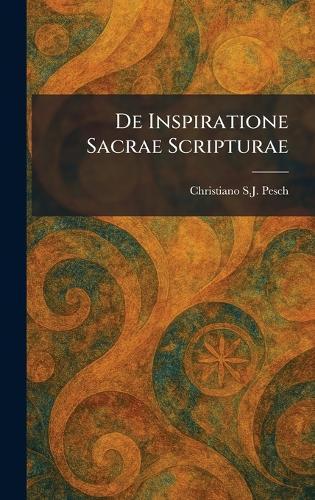
De Inspiratione Sacrae Scripturae...
Hardback
$100.95 $80.58
Not in-store but you can order this
Translation, Disinformation, and...
Anatomy of a Transpacific Cyber...
Paperback
$76.95
Not in-store but you can order this
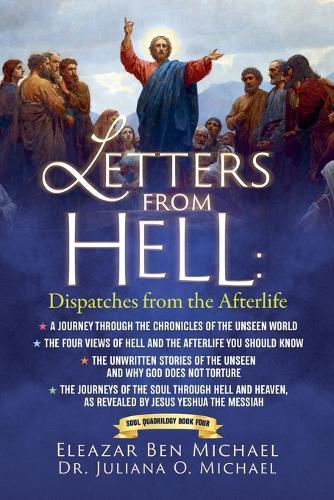
Letters from hell
The Journeys of the Soul through...
Paperback
$48.95 $41.61
Not in-store but you can order this
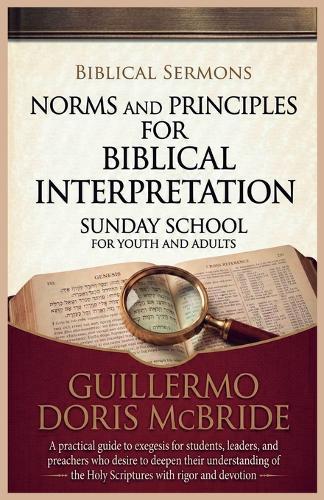
Norms and Principles for Biblical...
Paperback
$29.95 $27.21
Not in-store but you can order this