Bargains! PROMOTIONS


James Si Zeng is an Associate Professor of Law at the University of Hong Kong (HKU). Prior to joining HKU, he served as an Associate Professor at the Chinese University of Hong Kong, holding a J.S.D. from Yale Law School and dual degrees in Law and Economics from Peking University.
'A Legal Theory of State-Owned Enterprises provides an important new theoretical perspective on the development and persistence of Chinese SOEs, based on a wide-ranging analysis of the interplay between ownership costs and regulatory costs in China's distinctive political/legal system. But Professor Zheng's book is more than a theoretical exercise. It offers a nuanced, thoroughly researched account of China's public and private-sector commercial actors and a roadmap for their future reform. It should be read by anyone interested in Chinese economic and institutional development.' Curtis J. Milhaupt, William F. Baxter – Visa International Professor of Law, Stanford Law School 'Professor Zeng's insightful analysis of SOEs highlights the critical role that law and legal institutions can play in shaping state and private ownership. A particular contribution is his consideration of the underexplored concept of regulatory costs, demonstrating how contractual limitations and the incompleteness of the law, among other factors, can influence the choice between SOEs and private ownership. In doing so, Professor Zeng provides a nuanced framework in which to understand the trade-offs between state ownership and public regulation, and demonstrates that the choice between public and private ownership is often shaped by the structure and stability of the law and legal institutions. Professor Zeng's analysis is particularly compelling in its application to China, providing a sector-specific review of SOEs and offering new insight into why SOEs are dominant in some industries while private enterprise thrives in others. In the end, beyond SOEs, Professor Zeng's analysis is a prescription for what China must do to encourage further private ownership. As he explains, the cost of replacing state ownership with a formal legal and regulatory system may be substantial. Nevertheless, he provides a compelling argument for why China must commit to doing so if it chooses to promote further private investment.' Charles K. Whitehead, Myron C. Taylor Alumni Professor of Business Law, Cornell Law School
The Republic of Beliefs
A New Approach to Law and Economics...
Paperback
$44.99
Not in-store but you can order this
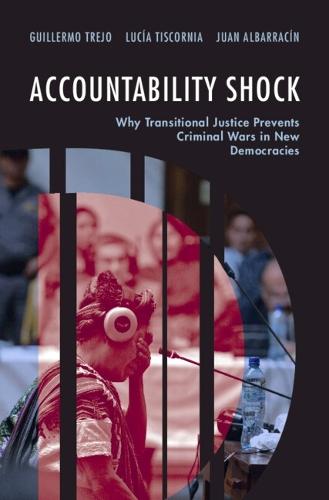
Accountability Shock
Why Transitional Justice Prevents...
Hardback
$343.95 $275.46
Not in-store but you can order this
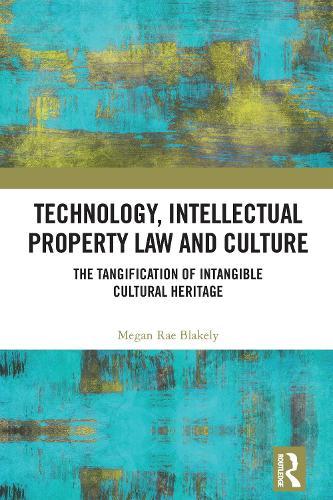
Technology, Intellectual Property...
The Tangification of Intangible...
Paperback
$106.95 $85.87
Not in-store but you can order this
Black Lives, White Law
Locked Up and Locked Out in Australia...
Paperback
$36.99
Not in-store but you can order this
Australian Law in Context
Social, Political and Global Perspectives...
Paperback
$106
Not in-store but you can order this