Bargains! PROMOTIONS


Julia Cagé is Professor of Economics at Sciences Po Paris and the author of Saving the Media and The Price of Democracy. Thomas Piketty is Professor of Economics and Economic History at the School for Advanced Studies in the Social Sciences and the Paris School of Economics. His books include A Brief History of Equality, Capital and Ideology, and the bestselling Capital in the Twenty-First Century.
A bold undertaking [that] will undoubtedly fuel political and social debate… A key concept highlighted as a determinant of voting is geosocial class, defined as… a cross-referencing of socioeconomic data and location within the territory.… Through the systematic use of this approach, [Cagé and Piketty] reach conclusions that contradict current political discourse. They make clear, in particular, that variables linked to geosocial class are far more important than those relating to religion and foreign origin. -- <i>Le Monde</i> The methodology, based on electoral and social data from 36,000 communes, allows for finer, more reliable comparisons than post-electoral polls… The data is clear, the authors argue: the popular base of the Left is much stronger than is often claimed. -- <i>L’Obs</i> In a work of significant scientific importance, economists Julia Cagé and Thomas Piketty skillfully blend politics and history, sociology, economics, and geography. An intersection of ideas from which several surprising insights emerge to illuminate the major issues at stake today. -- <i>Marianne</i> One can only be amazed by the scale, at once surgical and monumental, of this study of the shifting and complex links between the French vote since 1789 and the social and geographical status of voters.… A History of Political Conflict will provide food for thought for political leaders of all stripes for years to come. -- <i>Télérama</i> Aims to enlighten every citizen on what has been driving political conflict in France since the Revolution.… Precise, well-documented, and analytical as the book is, it is also a work of intervention, in the sense that its analyses are intended as a possible way of reinventing a left-wing program, making it more attentive to economic justice and inequalities. -- <i>Les Inrockuptibles</i>
Run Zohran Run!
Inside Zohran Mamdani's Sensational...
Paperback
$32.99
Not in-store but you can order this
Lie Machines
How to Save Democracy from Troll...
Hardback
$46.95
Not in-store but you can order this
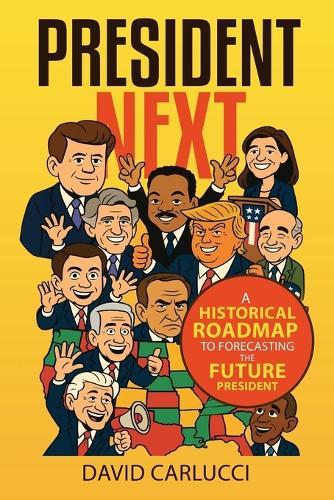
President Next
A Historical Roadmap to Forecasting...
Paperback
$33.95 $30.23
Not in-store but you can order this
Rust Belt Union Blues
Why Working-Class Voters Are Turning...
Paperback
$36.95
Not in-store but you can order this