Bargains! PROMOTIONS


Anna Bottesi is a post-doc researcher. She makes research on ethnographic collections and Indigenous peoples in Brazil.
“In this important book, Anna Bottesi highlights the cultural and political significance of the many stories ethnographic museum objects can tell. Combining historical research with ethnographic fieldwork, she shows how Kambeba and Munduruku artefacts from Brazil – once collected and displayed to construct colonial imaginaries – can now spark conversations that place indigenous voices at the forefront.” —Davide Domenici, Department of History and Cultures, University of Bologna, Italy. “Bottesi’s work brings an insightful discussion about the problematic character of anthropological museums in terms of how they historically reproduced a colonial framework. The book promotes dialogues between historic and ethnographic sources and European and indigenous perspectives, breaking hierarchies of knowledge and critically engaging with the discussion about how problematic was(is) the invention of the Indigenous America.” —Dr. Vinicius Mariano de Carvalho, Reader in Brazilian and Latin American Studies, King’s College London, UK. “Bottesi’s book critically reflects on how European museums include Indigenous objects into narratives of alterity. Tensioning colonial views with contemporary Kambeba and Munduruku perspectives, she argues for the recognition of Indigenous epistemological authority as a tool for rethinking exhibitory as inclusive spaces. It is a recommended and transformative reading.” —Paride Bollettin, Assistant Professor, Department of Anthropology, Masaryk University, Czech Republic.
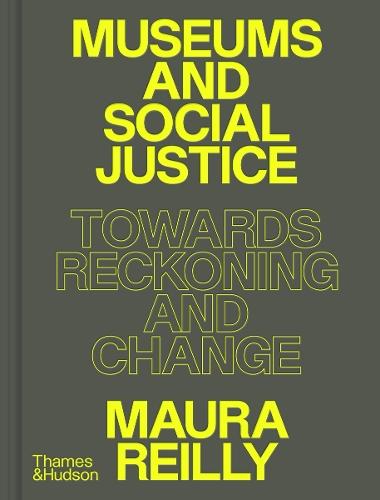
Museums and Social Justice
Towards Reckoning and Change
Hardback
$54.99
Not in-store but you can order this
The Psychic Lives of Statues
Reckoning with the Rubble of Empire...
Hardback
$41.95
Not in-store but you can order this
The Art Institution of Tomorrow...
Reinventing the Model
Hardback
$57.99
Not in-store but you can order this
Crafted With Pride
Queer Craft and Activism in Contemporary...
Paperback
$49.95
Not in-store but you can order this