Bargains! PROMOTIONS


Stephen Earle has been a student of Japanese language and East Asian culture and history for almost fifty years. He lived and worked in Japan continuously for sixteen years during the 1970s and '80s and has visited frequently since. He has also lived and worked in China and Singapore and travelled extensively in East, Southeast, and South Asia. He estimates he has crossed the Pacific Ocean more than 250 times. Following a forty-year career in international business, during which he served in executive capacities and on the boards of several Japanese and U.S. corporations, Earle retired in 2015 to write. Heaven's Wind is his second book. His first, Words Characters and Transparency- An Introduction to the Art and Science of KOTOHA, was self-published in 2003. He is also co-translator, with Josh Drachman, of A Light on Transmission- The Teachings of Morihei Ueshiba, Founder of Aikido by Mitsugi Saotome. Earle and his wife, Akemi, live in Richmond, Virginia, where he teaches aikido and she teaches Japanese language. They have two children and three grandchildren.
Nakamura Tempu's story is an inspiration. This book is both a great read and a valuable contribution to the conversation regarding the effects of mental attitude on health and well-being. -- Miriam E. Nelson, PhD, New York Times best-selling author of the Strong Women book series Many years ago, in Japan, I was very fortunate to study directly with Nakamura Tempu. His teaching has given my life a strong base, and at difficult times of my life abroad I have drawn strength from it. I congratulate Stephen Earle on an inspiring and carefully researched biography, which relates Tempu-sensei's life to the turbulent times in which he lived and outlines his martial philosophy of the unification of mind and body. --Naoko Matsubara, internationally acclaimed woodcut artist Nakamura Tempu is known in the West as a teacher of the aikido master Tohei Koichi (1920-2011), who took from him the rallying cry unification of mind and body. Stephen Earle's stimulating biography draws together the many strands of Nakamura's life, and sets this fascinating figure against events and personalities of the day in Japan, China, Europe, and the United States. --David Waterhouse, Professor Emeritus, Department of East Asian Studies, University College, University of Toronto
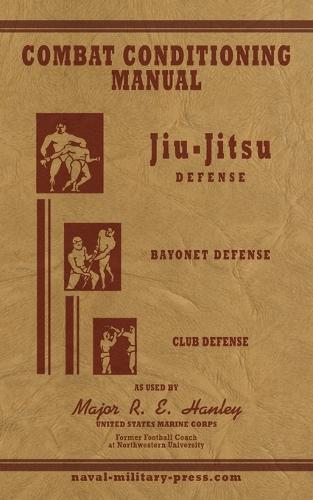
COMBAT CONDITIONING MANUAL - Jiu-Jitsu...
Paperback
$38.95 $32.71
Not in-store but you can order this
Look Twice
Your Guide to Staying Safe in an...
Paperback
$55.95 $47.73
Not in-store but you can order this
How to Survive the Unthinkable
10 Ways to Protect Your Family from...
Paperback
$24.95 $22.16
Not in-store but you can order this
Preparedness For Your Way Of Life...
A guide to helping you get through...
Paperback
$52.95 $45.28
Not in-store but you can order this
Mobile Security & App Protection...
How to Keep Your Smartphone, Apps,...
Paperback
$28.95 $25.91
Not in-store but you can order this
Born to Fight
How a Street Fighter Living on the...
Hardback
$61.99
Not in-store but you can order this