PRIZES to win! PROMOTIONS


Jeanne Achterberg, PhD, (1942-2012) was a professor of psychology at the Institute of Transpersonal Psychology (now Sofia University) and served as associate professor and director of research in rehabilitation science at Southwestern Medical School in Dallas.
The history of female healers in the West from prehistoric times to the present, cursorily summarized by a psychology professor at the Institute of Transpersonal Psychology. Achterberg points out that the status of women healers, high in ancient cultures such as the Amazons but in decline ever since, is intrinsically related to women's position in their culture's cosmology and to the resultant potency of the feminine myth. Historically, times of peace allow for reinstatement of women healers (as well as female deities and an increased status for women generally), while stressful periods turn mother goddesses into warriors and monsters and position both women and female healers at the lower end of the power scale. Tracing medicine women's decline through the cultures of Sumer, ancient Denmark, Greece, Rome, and early and medieval Christianity from shaman to witch, Achterberg goes on to applaud efforts made by women in 19th- and 20th-century Western cultures to participate in the healing professions - as midwives forbidden proper medical education, as ground-breaking female doctors, and as underpaid, underrespected nurses. Pointing out that, historically, the medical profession has lost status whenever women have entered it, Achterberg warns of the obstacles modern-day female doctors are therefore bound to encounter from their nervous male colleagues, and she urges women to contribute their own, possibly more empathetic and humane, life view to a practice by now seriously skewed toward the masculine. Comprehensive if occasionally imprecise, this works best as a quick historical reference. (Kirkus Reviews)
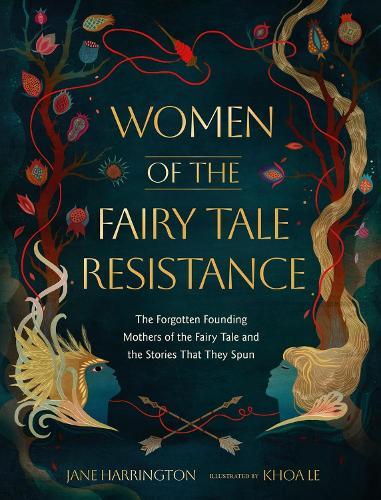
Women of the Fairy Tale Resistance...
The Forgotten Founding Mothers of...
Hardback
$49.99
In Stock 😊