PRIZES to win! PROMOTIONS


Elizabeth Bartholet is a professor at Harvard Law School. Her first book, Family Bonds- Adoption, Infertility, and the New World of Child Reproduction, was called ""brilliant . . . an intelligent and passionate exploration of the legal, racial, and psychological issues"" by The New York Times Book Review. The mother of three boys, two of them adopted from Peru, she lives in Cambridge, Massachusetts.
A disturbing look at how the lives of America's modern-day orphans are sacrificed for the often unrealistic goal of keeping troubled families together. Bartholet (Family Bonds: Adoption and the Politics of Parenting, 1993), an expert on family law and an adoptive mother herself, traces the historical, political, and cultural reasons why battered and neglected children are far more likely to spend years in foster limbo, or be sent back to abusive homes, than to be adopted by loving families. The author charges that despite recent legislation that bars race as a factor, everyone from private foundation administrators to judges, lawyers, and bureaucrats continues to be guided by the notion that children should be cared for by relatives, or adopted by families who look like them. Back in 1972, the National Association of Black Social Workers denounced transracial adoption as a form of racial genocide. Though race-matching policies have gone underground since then, Bartholet believes they resurface in criteria like kinship and cultural competence. Because other relatives may not be up to the task of parenting, and because there are not enough minority families to adopt all the children who need them, the author asserts that race-matching essentially condemns many youngsters to lasting physical, cognitive, and emotional damage. Whereas wife beaters are treated like criminals, child abusers, often plagued by poverty and substance abuse, tend to be seen as victims themselves. Bartholet expresses sympathy for their plight but demands that social workers stop using precious child-welfare resources to prop up deeply disturbed families. What matters, she insists, is that the children get into homes where they can thrive. She also suggests, somewhat unrealistically, that the state could take a proactive role in reducing child abuse by instituting universal visitation of all families before and after birth. The author makes her case intelligently, fearlessly, and exhaustively. Curiously, since her subject matter is so wrenching, Bartholet's writing lacks emotional power. Nobody's Children ultimately appeals not to the heart, but to the head. (Kirkus Reviews)
A Judgement-Free Guide to Feeding...
Boob, bottle and all
Paperback
$34.99
Not in-store but you can order this
The Triple Package
What Really Determines Success
Paperback
$19.99
Not in-store but you can order this
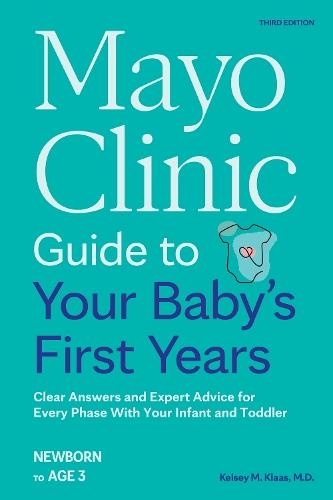
Mayo Clinic Guide to Your Baby's...
Clear Answers and Expert Advice...
Paperback
$44.99
Not in-store but you can order this
A Parent's Guide to Raising Grieving...
Rebuilding Your Family after the...
Paperback
$31.95
Not in-store but you can order this