Bargains! PROMOTIONS


Sander L. Gilman is the Henry R. Luce Professor of the Liberal Arts in Human Biology at the University of Chicago. He holds positions there as Professor of Germanic Studies and Professor of Psychiatry and is a member of the Fishbein Center for the History of Science and the Committee on Jewish Studies. He is a cultural and literary historian and the author or editor of over forty books.
[The book's] power rests in Gilman's understanding of the complex interactions and negotiations that drive the logic of bigotry and in its revelations about the deeper pathological connections between sexism, racism, anti-Semitism, and homophobia. -- Maurice Berger, The Village Voice Literary Supplement [This work] displays all the familiar hallmarks of Gilman's formidable scholarship ... [and] points to a new direction for Freud studies. Gilman transcends the ultimately sterile disputes ... regarding the birth of psychoanalysis. -- Roy Porter, The New Republic Freud, Race, and Gender is not ... simply another study of Freud's multiple Jewish identities... Gilman is principally interested in the unresolved tension between the rhetoric of race and the equally powerful rhetoric of science in Freud's work. -- Times Literary Supplement ... as eye-opening as it is myth exploding... [Gilman's] material is often disturbing, and his conclusions are made all the more unsettling by the fact that they are utterly convincing. -- The Forward Gilman [is] one of the most original and stimulating cultural historians of his generation. -- New Statesman & Society ... the most convincing account of how Freud's anxiety about being Jewish is reflected in his work. -- Howard Eilberg-Schwartz, New York Times Book Review Original and penetrating ... display[s] all the familiar hallmarks of Gilman's formidable scholarship... richly erudite in the small print of medico-scientific writings of the fin-de-siecle era, showing Freud as a child of his times. -- Roy Porter, The New Republic This book contains astonishing morsels of European cultural and medical history, the sort of thing you find yourself reading aloud over the breakfast table on a Sunday morning. The author has read widely in all kinds of English and German-language sources ... and makes free use of them. His most striking examples illustrate the institutionalized racism of the late nineteenth and early twentieth centuries. The degree to which anti-Semitism, especially, permeated medicine and all the biological sciences during Freud's lifetime comes as a revelation even to those who flatter themselves with some knowledge of the period. -- Rita Goldberg, The Boston Book Review Gilman synthesizes the work of psychoanalysts, Freud biographers, literary critics, and historians to provide this impressive new reading of the meanings of 'race' and 'gender' in Freud's time. With admirable scholarship, the author tackles numerous assumptions about the manner in which Freud's Jewish male identity shaped his scientific stance in and against antisemitic culture... The book also has great relevance to contemporary debates on multiculturalism. -- Choice
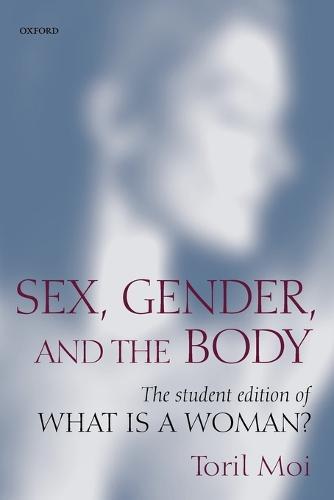
Sex, Gender, and the Body
The Student Edition of What Is a...
Paperback
$105.95
Not in-store but you can order this
Transgender History, Third Edition...
Resources for Today's Struggle—and...
Paperback
$36.99
Not in-store but you can order this
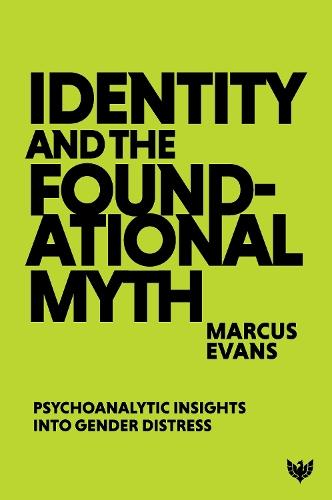
Identity and the Foundational Myth...
Psychoanalytic Insights into Gender...
Paperback
$75
Not in-store but you can order this
Wrestling with God and Men
Homosexuality in the Jewish Tradition...
Paperback
$48.95
In Stock 😊
Boys & Sex
Young Men on Hookups, Love, Porn,...
Hardback
$60.95
Not in-store but you can order this