Bargains! PROMOTIONS


Ernie Pyle (1900-1945) was a Pulitzer Prize-winning war correspondent. He worked as managing editor of The Washington Daily News and later became a roving journalist for Scripps-Howard Alliance. After many years following the fighting in Europe, he traveled to the South Pacific, where a sniper's bullet took his life. David Chrisinger (introduction) is the author of The Soldier's Truth- Ernie Pyle and the Story of World War II and several other books, including Public Policy Writing That Matters, for which he won the National Council of Teachers of English George Orwell Award for Distinguished Contribution to Honesty and Clarity in Public Language. He directs the Harris Writing Workshop at the University of Chicago's Harris School of Public Policy and leads memoir-writing workshops for military veterans and their families through The War Horse, an award-winning nonprofit newsroom named in honor of Ernie Pyle that aims to improve our understanding of the true costs of military service. He lives in Chicago.
“I personally cherish Brave Men for . . . Pyle’s descriptions of scenes he witnessed; his simple, unassuming style; and his ability to recognize the humanity in everyone he meets. . . . His eye for detail, what is essentially the eye of a poet, is on full display throughout Brave Men and is a masterclass in how embedded witnesses can convey the truth about an experience that cannot be fully understood unless it is lived. . . . Even though he’s been dead for nearly eight decades, Pyle had so much to say about the world we find ourselves living in today.” ―David Chrisinger, from the Introduction “A classic collection [by] the most beloved war correspondent of World War II . . . Pyle’s style is what made him so popular back then, and why he is still worth reading today. He looks at the war from a retail level. He mentioned those he encountered by name, giving their home town, and occasionally their street address. . . . His prose is straightforward and spare, highly readable. . . . The book contains some of Pyle’s best writing, including his best-known column, ‘The Death of Captain Waskow.’ . . . It is a reminder of the best in America back in the 1940s. Yet much of what he writes about still exists in today’s small-town and rural America.” ―The Epoch Times
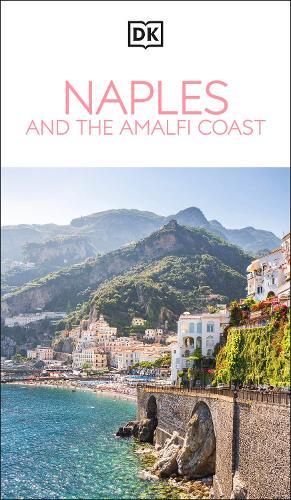
DK Naples and the Amalfi Coast
Must-See Sights. Culture & History....
Paperback
$39.99
In Stock 😊
Michelin Travel Guides Short Stays...
London: Fully Updated and Includes...
Paperback
$21.99
In Stock 😊