Beat the rise! Delivery fees are going up soon. INFO


<br>Kenneth R. Johnston received his Ph.D. from Yale University and spent his entire academic career at Indiana University in Bloomington, Indiana, where he was honoured for distinguished teaching and scholarly achievement, while also heading its Department of English. He has also taught at the universities of Bucharest and Colorado, and Georgetown University. He now resides in Alexandria, Virginia.<br>
No one before Johnston has understood the poetry of the Romantic period so centrally in the context of Pittâs alarm ... This fascinating book is one way of thinking afresh about the huge damage a tyranny such as Pittâs can do, not just to a generation of writers, but to the development of a whole culture. * John Barrell, London Review of Books * Johnston has written a book that is part investigative history and part elegy ... a story that has waited a long time to be told. We might think of Unusual Suspects as a cross between William Hazlittâs The Spirit of the Age and E.P. Thompsonâs The Making of the English Working Class: group biography meets radical history. * Times Literary Supplement * The great strength of Johnston's approach is its breadth and accessibility. To provide such a rich tableau of the 1790s and its writers and thinkers, both known and unknown, in only four hundred or so pages is a remarkable achievement. Unusual Suspects is a profoundly useful book for every student of the period, at whatever level of accomplishment; if it does not fundamentally change the way we view and teach the period, it should. * Elias Greig, BARS Review * The book's greatest contribution is to show how the reign of alarm shaped the ideas and writing of these extraordinarily talented writers. That many of them are now scarcely known even to literary academics reinforces one of Johnston's recurrent points ... that this reign not only caused the ruin of personal lives and the deferral of political reforms but also hampered the genesis of great literature, including Romanticism itself ... Johnston tells a good story in a prose style self-consciously American and more colloquial than one usually finds in academic writing. * Michael Scrivener, New Books on Line * A study of huge scope and persuasive argument which will be of benefit to literary scholars and historians alike. * Mary Fairclough, Literature and History * A new thorough-going treatment of a whole generation ... written with attractive informality of style ... that all students of the period will find themselves raiding for its judicious narration of ways in which texts of all kinds participate in and do not merely respond to political change. * European Romantic Review * A deeply moving book ... reveals the appalling extent to which William Pitt's Reign of Alarm impacted upon the history of Romanticism during the 1790s ... providing overwhelming evidence that innumerable writing careers were brought to a shuddering halt in the 1790s ... a wonderful resource for these lost writers. * Review of English Studies * Generally ... when academics try to write for a broader, popular audience, we fail ... because we try too hard. But not Kenneth Johnston [who] has been developing [his] style since writing The Hidden Wordsworth ... a style charged with moral urgency ... that is not so much popular as populist ... his model is the writings of a usual suspect, mentioned often in the book: Thomas Paine. * Bruce Graver, The Age of Johnson * [An] exceptional study ... an invaluable resource to students of Romanticism. * Tim Whelan, The Coleridge Bulletin * engaging ... the sheer amount of material covered never feels overwhelming ... this is an important resource on a wide range of liberal thinkers of the late eighteenth century ... [and] it deserves a place on the bookshelf of any scholar interested in the literature of the French revolutionary period. * Stephanie Russo, Eighteenth Century Fiction *
The Discarded Image
An Introduction to Medieval and...
Paperback
$31.95
Not in-store but you can order this
The Countess of Pembroke's Arcadia...
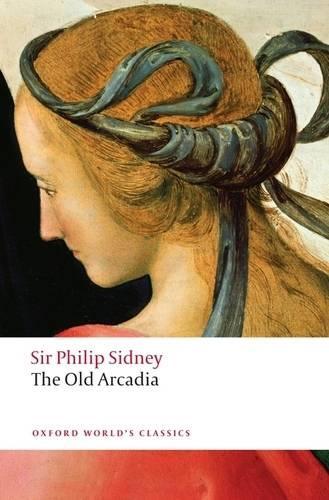
The Old Arcadia
Paperback
$25.95
Not in-store but you can order this