Beat the rise! Delivery fees are going up soon. INFO


Iain D. Thomson is a Professor of Philosophy at the University of New Mexico, where he also serves as Director of Graduate Studies. He is the author of Heidegger on Ontotheology: Technology and the Politics of Education (Cambridge University Press, 2005), and his articles have appeared in numerous scholarly journals, essay collections and reference works.
Advance praise: 'Heidegger, Art, and Postmodernity is a fascinating, engaging, and deeply insightful book that will have a revolutionary impact on the understanding of Heidegger's later thought, as well as make important contributions to our understanding of postmodernism, not just in philosophy, but in culture studies more broadly. Thomson's central thesis is that Heidegger's later thought is animated by the development of a distinctively postmodern sensibility. The sense in which his thought is postmodern, however, does not conform to the standard conceptions of postmodernism regnant in current literature. Rather, Heidegger's postmodernism lies in his sense that the late modern technologized epoch in which we live hides within itself the possibility of 'another god', a paradigm shift that takes us beyond the modern into a future we cannot yet envision.' William Blattner, Georgetown University 'Iain Thomson has a real knack for getting Heidegger to speak to contemporary concerns. Against the background of Thomson's pathbreaking interpretation of Heidegger's idea of 'ontotheology', the essays in this volume illuminate a sense of 'postmodernity' that responds to the nihilism of modernity's technological paradigm without falling into nostalgia for a single meaning of being. The resulting pluralism is adroitly explored through examples from high art and popular culture in ways that make Heidegger's difficult late works come alive.' Steven Crowell, Rice University 'I learned a lot from Iain Thomson's book. He has a masterful grasp of the diverse art forms he discusses and he writes about even the most obscure thinkers with verve and clarity. One can trust his critical evaluations, especially his appreciation of the ontological pluralism that stands at the center of Heidegger's hope for a postmodern understanding of being.' Hubert L. Dreyfus, Professor of Philosophy, Graduate School, University of California, Berkeley
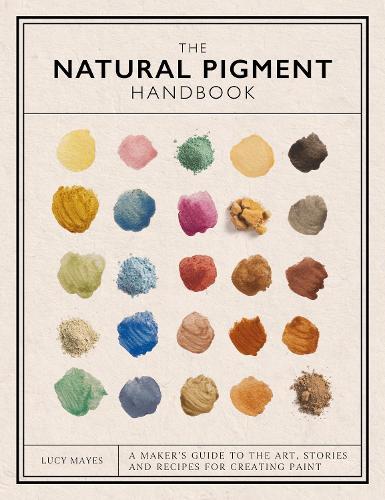
The Natural Pigment Handbook
A Maker’s Guide to the Art, Stories...
Hardback
$59.99
Not in-store but you can order this