Beat the rise! Delivery fees are going up soon. INFO


Dr. Tibor Jager completed his doctoral thesis at the Horst Görtz Institute for IT Security at Ruhr-Universität Bochum under the supervision of Prof. Dr. Jörg Schwenk. He is now a postdoctoral researcher at the Karlsruhe Institute of Technology.
Post-Quantum Cryptography
17th International Workshop, PQCrypto...
Paperback
$162.95 $130.01
Not in-store but you can order this
Quantum Advantage
Be Ahead. Be Safe. Win.
Paperback
$36.95 $31.41
Not in-store but you can order this
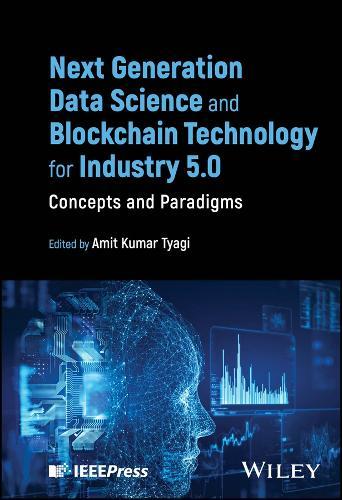
Next Generation Data Science and...
Concepts and Paradigms
Hardback
$358.95 $286.79
Not in-store but you can order this
The Second Brain for Families
Organize Knowledge, Memories, and...
Paperback
$54.95 $46.61
Not in-store but you can order this
सुरक्षा की पाठशाला – हर बच्चे के...
Edition1st
Paperback
$22.95 $20.73
Not in-store but you can order this
Robert Fulton and the Submarine...
Paperback
$43.95 $37.59
Not in-store but you can order this