Beat the rise! Delivery fees are going up soon. INFO


In this stimulating and comprehensive essay collection (originally published as the Summer 1990 issue of Daedalus, which Graubard edits), distinguished American and Japanese scholars debate the significance of the Showa era - the reign of Emperor Hirohito, from 1925 to 1989 - in Japanese history. Ironically, Showa means enlightened peace - a term, the authors (including nine Americans and seven Japanese) make clear, that could not be less appropriate for this period in which Japan fought a world war, suffered ignominious defeat and occupation for the first time in its history, and subsequently rose to become the world's preeminent economic power. Ushered in with a lengthy introduction by Gluck (History/Columbia), the 16 essays offer as their main themes the causes of the war, the reasons for postwar growth, and the paradoxes in Japanese-US relations. The authors who address the issue of war (e.g., Masataka Kosaka: International Politics/Kyoto Univ.) see the conflict primarily as a Japanese reaction to vast British, Soviet, and American empires around Japan, and partially as the product of domestic forces (the weak constitutional structure and politically impotent imperial system, which left a power vacuum filled by military leaders). Regarding postwar growth, authors (e.g., Herbert Passim: Sociology/Columbia) tend not to emphasize Japanese ingenuity but to stress the unique history of American involvement in the Japanese economy, as well as policies imposed by the postwar government to encourage production and discourage consumption. The American influence is a major theme here, and there is a consensus among the authors that the American-Japanese relationship will continue to be of major significance for the economic well-being of both countries. Primarily for its rare mix of American and Japanese perspectives, an important contribution to our understanding of both Japan and Japanese-American relations. (Kirkus Reviews)
American Moonshot
John F. Kennedy and the Great Space...
Paperback
$56.95 $51.25
Not in-store but you can order this
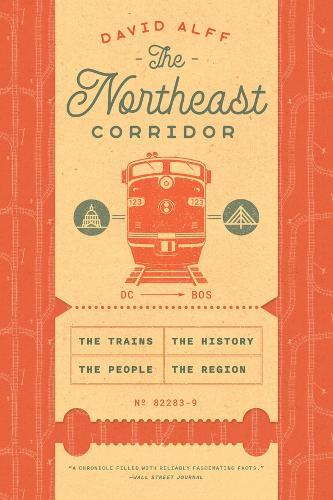
The Northeast Corridor
The Trains, the People, the History,...
Paperback
$34.95
Not in-store but you can order this
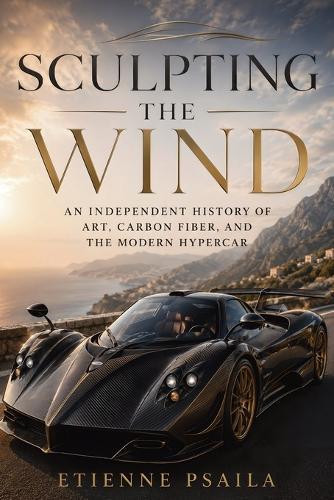
Sculpting the Wind
An Independent History of Art, Carbon...
Paperback
$38.95 $33.31
Not in-store but you can order this