Beat the rise! Delivery fees are going up soon.


Roger Koenker is an Honorary Professor of Economics at University College London. He was a member of the technical staff of Bell Labs and Professor of Economics and Statistics at the University of Illinois. He is a fellow of the Econometric Society, the ASA and the IMS. Jiaying Gu is an Associate Professor of Economics at the University of Toronto.
'For over a century, most statisticians have known that, in parametric inference problems, Bayes's theorem provides the best achievable informational summary of the data if certain prior information was available. For nearly that long, some statisticians have sought to extract sufficient information from the same data to provide a reasonable substitute for the needed prior information, in effect allowing the analyst to reach near perfection without making unreasonable prior assumptions. Koenker and Gu summarize and advance this program with a welcome display of what may be termed these days 'Natural Intelligence.' Stephen M. Stigler, University of Chicago 'As the renowned scholar Daniel McFadden once put, it is easy nowadays to be swamped in data, but starved for knowledge. Proper understanding requires adequate tools, rules and (possibly?) duals! Roger Koenker and Jiaying Gu elegantly present and lucidly discuss some of those tools and rules from the viewpoint of two leading econometricians. The book interlaces historical context, technical explanations and practical applications on Empirical Bayes protocols in an entertaining and clear manner. I am sure this book will become an important reference and a guide for further ideas on the theme.' Aureo de Paula, University College London 'This insightful book summarizes and extends the fruits of a long-term collaboration between two world-class statisticians and econometricians on the consequences of heterogeneity among agents for inference and decision. It illuminates the foundations of many conventional estimators and extends their range. It develops new methods and presents user-friendly software to implement them. It offers many worked prototypical examples. This masterful work will become an essential toolkit for scholars interested in understanding and characterizing the variability that characterizes modern societies.' James J. Heckman, University of Chicago 'Koenker and Gu take readers through an exhilarating journey from the foundational developments of empirical Bayes methods to econometric applications and computational aspects. They address situations involving data on large numbers of anonymous subjects with heterogeneous characteristics of interest, the kind that has become ubiquitous in modern econometrics. Written with clarity and insight, this monograph is both intellectually rigorous and highly readablea must-read for anyone interested in the measurement of heterogeneity. It is sure to become a classic.' Manuel Arellano, Professor of Economics, CEMFI, Madrid
Fonctionnaire malgré tout
Faire plus avec moins
Paperback
$39.95 $34.06
Not in-store but you can order this
Projektmanagement
Nach wie vor oder anders?
Paperback
$51.95 $44.31
Not in-store but you can order this
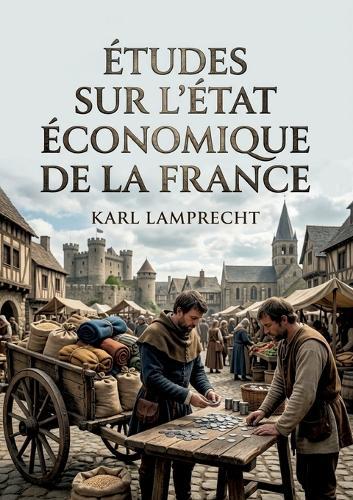
Études sur l'état économique de...
Une analyse de l'économie française...
Paperback
$91.95 $82.76
Not in-store but you can order this
How to Make the World Add Up
Ten Rules for Thinking Differently...
Paperback
$24.99
Not in-store but you can order this
Advanced Business Englisch für HR-Manager*innen...
Praxisorientierter Leitfaden auf...
Paperback
$79.95 $67.77
Not in-store but you can order this
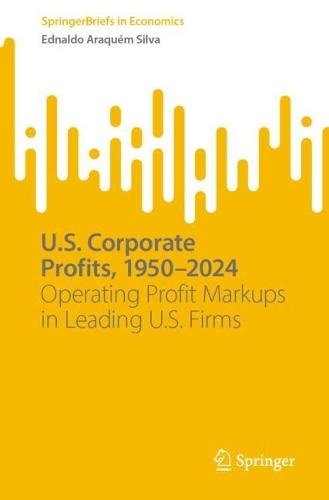
U.S. Corporate Profits, 1950–2024...
Operating Profit Markups in Leading...
Paperback
$111.95 $89.44
Not in-store but you can order this