Beat the rise! Delivery fees are going up soon. INFO


MAGNUS BOSTRÖM is Associate Professor in Sociology and Environmental Lecturer at Södertörn University College, Sweden. He studies environmental action, policy making, rule setting, green political consumerism, and sustainability projects in various sectors. He is co-editor of Organizing Transnational Accountability. MIKAEL KLINTMAN is Associate Professor at the Research Policy Institute, Lund University, Sweden. His research areas include environmental governance, ethical and political consumerism and the sociology of consumption.
'...the rich empirical base and its many references make this a book worth buying and reading.' - Mats Bladh, International Journal of Consumer Studies 'thoughtful and ambitious...a convincing analysis of labelling as a site of political negotiation and contention, supported by well-researched case studies, which will be of interest to a broad range of social scientists, and to policymakers, marketers and civil society organizations' - Environmental Politics 'In connecting production and producers with consumption and consumers, green labels are an emerging phenomenon on today's global agenda for sustainability governance. Using a variety of theoretical perspectives and a rich empirical base, this excellent volume provides a balanced and in-depth analysis of the potentials, conditionalities, debates and drawbacks of green labeling. Highly recommended for scholars and professionals involved in environmental governance.' -Arthur P.J. Mol, Professor in Environmental Policy, Wageningen University, The Netherlands 'From snack foods to electricity to investment funds, ecolabels and other product certifications are becoming increasingly common tools for encouraging more sustainable forms of consumption. But can we trust these increasingly ubiquitous seals and labels? Is there any meaningful difference among the products that carry such endorsements? Bostrom and Klintman look behind the actual packaging and offer a pioneering and comprehensive account of how these assurance schemes and standards are manufactured and how they shape the buying practices of consumers in a new era of social and environmental consciousness.' -Maurie J. Cohen, New Jersey Institute of Technology, US and University of Leeds, UK 'This book focuses on a neat, compelling and important question: why trust labels and how do labels work? It shows how labelling has come to be central in environmental and other arenas worldwide, and takes us behind the scenes into the way labelling systems are maintained and made to work. The book offers sharp insights into a phenomenon that affects us all but that has barely been studied to date.' -Steve Yearley, Professor of the Sociology of Scientific Knowledge& Director of the ESRC Genomics Forum, University of Edinburgh, UK
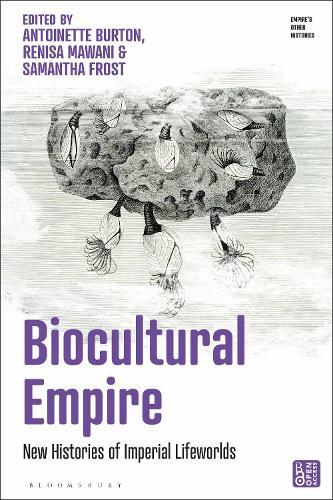
Biocultural Empire
New Histories of Imperial Lifeworlds...
Paperback
$59.99
Not in-store but you can order this
Crisis-ready Leadership
Building Resilient Organizations...
Hardback
$170.95
Not in-store but you can order this
The Search for Water
A Human History of Thirst
Hardback
$55
Not in-store but you can order this
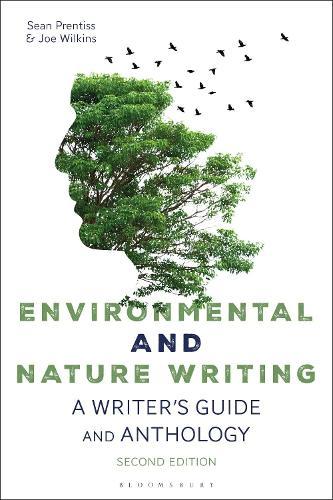
Environmental and Nature Writing...
A Writer's Guide and Anthology
Paperback
$44.99
Not in-store but you can order this